Choosing the right storage container size can save you time, money, and unnecessary stress. Whether you’re moving house, clearing out clutter, or storing business inventory, picking a container that’s too small—or too large—can lead to frustration and avoidable costs.
At Gold Coast Containers, we have years of industry experience and provide a wide range of secure and affordable storage solutions across Queensland. From on-site storage units at our Tweed Hills facility and off-site container storage at your Gold Coast property (in your backyard!) to new containers you can buy from us, we understand the importance of getting the right fit the first time. In this guide, we’ll walk you through how to estimate your storage space needs and what containers are available, along with their corresponding sizes and capacities.
Choosing the right storage unit size: Assessing your needs
Selecting the correct storage container starts with a clear understanding of what you’re storing—and how you’ll use the space. Planning ahead helps you avoid running out of room or paying for space you don’t need.
Step 1: Make an inventory and assess your items
Start by listing what you need to store. This helps estimate the volume and plan the layout.
- Item types: Are you storing furniture, boxes, appliances or commercial stock?
- Item categories: Group your items by category—like “Must Access Frequently,” “Fragile,” or “Stackable”—to optimise your layout and prevent damage.
- Volume: A few boxes or small furniture pieces take up much less space than the contents of an entire house or office.
- Item shape and fragility: Consider whether items are irregularly shaped, fragile, or difficult to stack.
- Storage duration: For long-term storage, extra space may be required for air circulation and ease of access.
- Access needs: Will you need to retrieve items frequently, or can they be stored tightly?
Step 2: Consider accessibility and layout
A well-organised container will save time and protect your items.
- Frequent access: If you’ll need to access specific items often, leave clear pathways inside the container.
- Use shelving or racks: This helps maximise space and keeps smaller items organised.
- Stacking vertically: Plan for safe stacking—use sturdy boxes and avoid stacking too high if items are heavy or fragile.
- Climate and pest concerns: If you’re storing sensitive goods (like documents, electronics, or fabrics), consider ventilation, climate control options, or protective packaging.
Step 3: Think about your future needs
Your storage needs might grow—especially during moves, renovations, or business expansion.
- Anticipate changes: Think about any new items you may need to store in the coming months.
- Plan for flexibility: It’s often better to size up slightly now than realise later that you’ve outgrown the container.
- Gold Coast Containers advantage: We offer flexible upgrade options, so if your needs change, we can help you transition to a larger unit.
Step 4: Factor in delivery & on-site space
If you’re hiring a container to be delivered to your property, ensure there’s enough space for drop-off and placement.
- Access: The delivery truck will need clear access—typically at least 3m wide and 3–4m high clearance.
- Surface requirements: Flat, stable ground (such as gravel, concrete, or asphalt) is ideal for safe placement.
- Delivery areas: Gold Coast Containers provides fast and reliable delivery across South East Queensland, including Brisbane, the Gold Coast, Sunshine Coast, and surrounding regions.
How to choose storage unit size: Understanding volume
Choosing the right storage unit size starts with understanding what you need to store and how long you’ll need the space. Think about the volume of your items—are you storing a few boxes and small furniture, or the contents of an entire home or business?
Smaller containers are ideal for short-term use or minimal belongings, while larger units are suited for bigger moves or long-term storage. Selecting the right size ensures you’re not paying for unused space or struggling to fit everything in. By planning ahead, you’ll make the most of your container from the very start.
Storage unit size guide: Our on-site & off-site containers
Not sure which container size suits your needs? Whether you’re storing household items, business stock, or tools, choosing the right unit can make all the difference. We stock self-storage unit sizes ranging from 8 feet to 20 feet. Here’s a quick guide, complete with dimensions, capacity, and ideal uses—to help you find your perfect fit.
8 foot
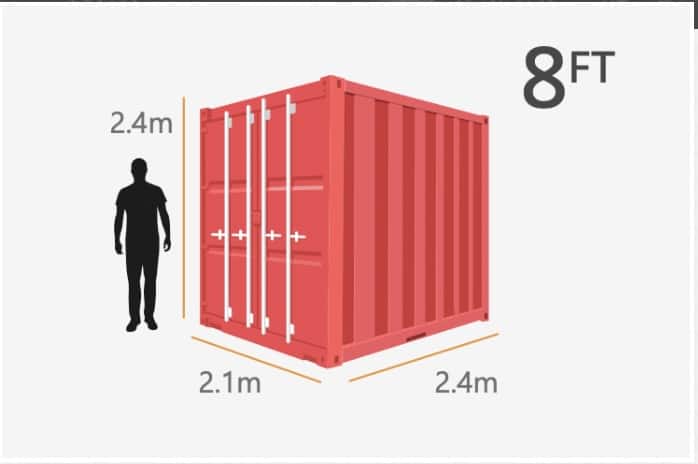
- Dimensions: 2.4m W x 2.4m H x 2.1m D
- Capacity: ~16 cubic metres (m³)
- Typical use: Contents of a small apartment or studio, and moving or storing boxes, small furniture, and seasonal items.
- Ideal for: Short-term storage, decluttering, small moves, temporary renovations, storing in limited spaces(e.g., driveways, tight yards), and business stock overflow.
10 foot
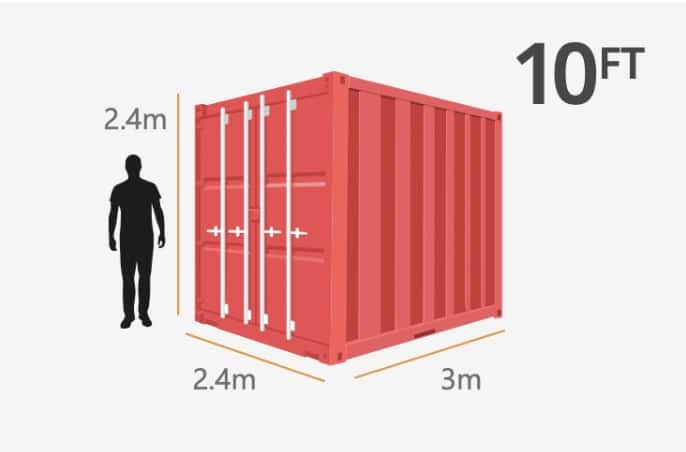
- Dimensions: 3m W x 2.4m H x 2.4m D
- Capacity: ~33 cubic metres (m³)
- Typical use: Contents of a one-bedroom apartment, and storing appliances, boxes, furniture, and tools.
- Ideal for: Renovations, on-site tool storage, business inventory, mid-sized home projects, small apartment furniture, seasonal items, or as an overflow unit for retail and small businesses.
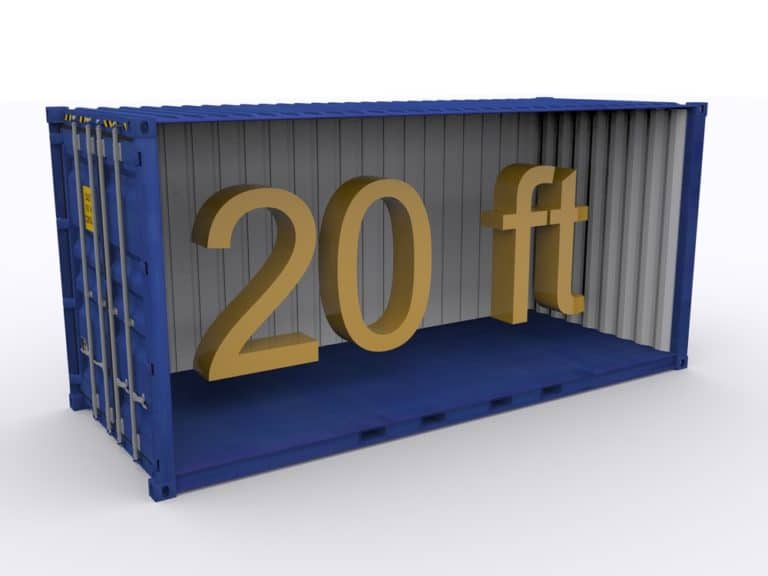
20 foot
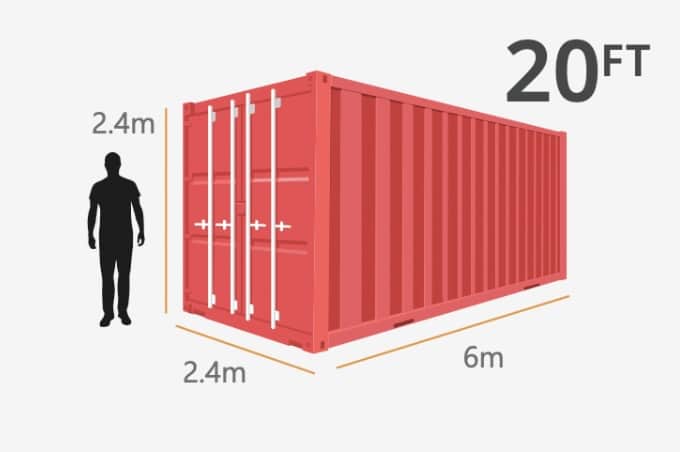
- Dimensions: 6m W x 2.4m H x 2.4m D
- Capacity: ~38 cubic metres (m³)
- Typical use: Contents of a 2-3 bedroom home, business storage, long-term furniture storage, commercial stock and bulky equipment.
- Ideal for: Home moves, warehouse overflow, trade storage, construction site storage, and locations and business operations requiring secure, mobile storage.
What size storage unit do I need? Common mistakes to avoid
It’s easy to make mistakes when selecting and packing a storage container. Here are some common errors to avoid that will save you money, time and frustration over time.
1. Underestimating how much space you need
One of the most common mistakes is underestimating the volume your belongings occupy. Items like wardrobes, lounges, and office furniture are often bulkier than you think. It’s better to slightly over-estimate and have extra space than to run out in the middle of packing before you store!
Top Tip: Measure large items and use a rough storage space calculator to gauge your needs.
2. Ignoring vertical space
Many people forget that storage containers offer vertical room—especially 8ft, 10ft, or 20ft units with internal heights of over 2 metres. Not stacking items properly or safely can waste valuable space.
Top Tip: Use stackable boxes, and place heavier items at the bottom. Shelving units can maximise height without risking damage.
3. Overpacking or poor packing
Cramming items might save space, but it will often lead to hard-to-reach items, broken belongings, and even safety hazards.
Top Tip: Leave breathing room, especially for fragile or climate-sensitive items. Use padding, pallets, and proper packing materials.
4. Not labelling or organising for access
If you need to access your items later, disorganisation can cause significant headaches. People often pack without planning for future retrieval.
Top Tip: Label all boxes clearly and group similar items together. Keep frequently accessed items near the front or along an accessible path inside the unit.
5. Security and peace of mind
Choosing the correct storage container isn’t just about size—it’s also about safety. At Gold Coast Containers, all of our units come with robust locks and secure facilities, giving you confidence that your belongings are protected 24/7. Whether on-site or delivered to your property, our containers provide peace of mind as well as convenience and flexibility.
Top Tip: If your property has the space, a storage container on your land will save on transport costs and allow you access items immediately with ease.
For more tips on determining the size of a storage unit that suits your storage needs, contact our friendly team today.