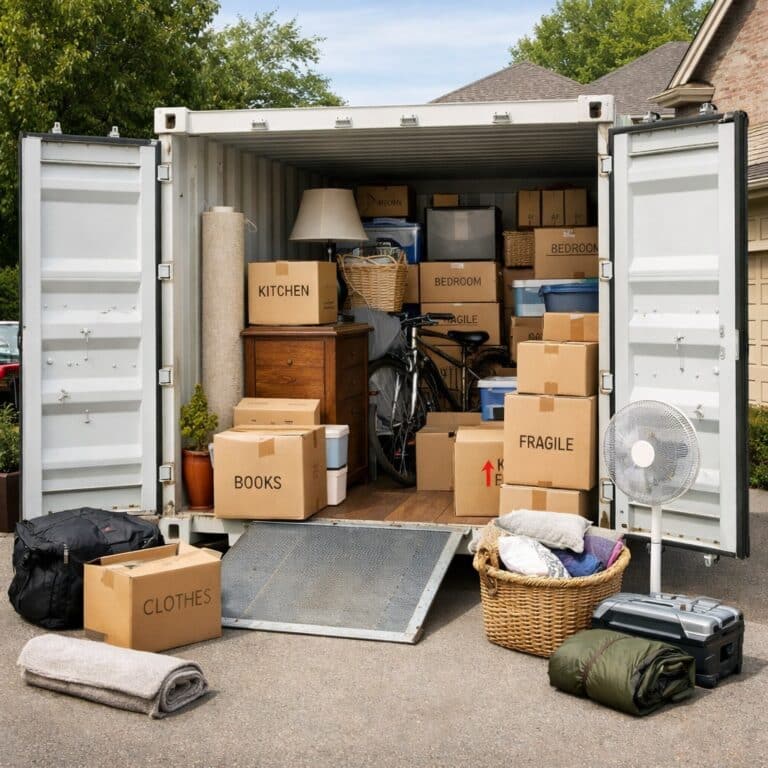
Whether you’re storing glassware, crockery, or that vase you got as a wedding gift that’s not really your style, it’s important to pack fragile items securely. After all, there’s nothing worse than discovering your fragile items knocked together and chipped on the drive to or from your self-storage container.
In this guide, we share our tips for packing fragile items, including the best packing material for fragile items and the three simple steps we recommend everyone take when storing fragile items to minimise breakages.
Most common fragile items in storage
When most people think of fragile items, wine glasses, crockery, and antiques are typically the first to spring to mind. But there’s a wide range of items it pays to take extra care for when packing—especially if they’re valuable or irreplaceable. If there’s a good chance the item could break, be scratched, or otherwise become damaged while in transit without careful packing, it’s best to think of it as a fragile item and pack it carefully. Some of the most common fragile items we recommend packing carefully include:
- Crystal or glass drinking glasses (e.g. tumblers, champagne flutes, beer glasses etc.). Check out our article on ‘How to Pack Glasses for Moving‘ for more top tips.
- Ceramic or glass dinnerware
- Vases
- Mirrors
- Musical instruments
- Artwork
- Lampshades or ornamental light fixtures
- Wine or spirit bottles
- Delicate furniture
- Televisions and PC monitors
- Antiques. For specific antique storage tips, read our guide on ‘How To Store Antiques In A Storage Container‘.
Three simple steps to pack fragile items
Here’s our tried and tested three-step process we recommend for packing fragile items.
- Check and clean your fragile items: Before you even start pulling out the moving boxes, we recommend giving your fragile items a quick once-over to ensure they go into storage in good condition. Remove any dust or residue built up on the item, and ensure you dry your fragile items thoroughly to prevent mould or mildew from developing while in storage. For example, running wine glasses through the dishwasher is a quick way to give them a clean before packing them away. While you’re cleaning your fragile items, inspect them for cracks, chips, discolouration or any other signs of damage. Knowing what condition your fragile items are in before they go into storage can make it easier to tell what damage was caused in transit or in storage in the unfortunate event an accident does happen. For particularly valuable items, it can be a good idea to photograph the fragile item before it goes into storage so you have a record of its condition.
- Wrap each item: Individually wrapping each item is essential to prevent items from rubbing against each other in storage. For some items, all you need is to wrap them in a sheet of newspaper or an old tea towel. For more expensive or precious items, however, it’s a good idea to securely wrap your item in bubble wrap and tape it closed.
- Pack fragile items in a box: Smaller items should be packed into a plastic container or sturdy cardboard box once they’ve been individually wrapped. Not only does this make them easier to move and stack, it also adds an extra layer of protection against bumps and will keep moisture out. When you’re packing the boxes, place heavier items on the bottom and lighter items on top. Make sure items fit snugly to prevent too much movement, but don’t overpack the box—you don’t want it to be so heavy you can’t move it. Once the box is packed, label it and place a ‘fragile’ sticker on top so everyone knows to handle it with care.
Tips for packing fragile items
Here are our top tips for packing fragile items:
- Label boxes or make an inventory: Labelling your boxes is essential. Either write directly on the box or use labels so you know exactly what’s inside each box. If you’re packing lots of items, it can be helpful to create a digital inventory—simply label each box with an alphanumeric code (e.g. A1) and then use a spreadsheet to record the contents of that box as you pack it.
- Use cardboard to shield large, fragile items: Some larger items, like mirrors or guitars, might not pack easily into a box. Follow the same steps as above and wrap them carefully in layers of bubble wrap. For extra protection, you can then cover the sides with large sheets of thick cardboard to act as a buffer during transit.
- Use suitcases instead of boxes: If you have spare suitcases, they can make a great alternative to boxes as they provide an added layer of cushioning for fragile items.
Best packing material for fragile items
The best packing material for fragile items depends on how precious the item is. While a sheet of newspaper might be sufficient for sturdier crockery, others might need the full bubble wrap treatment. Here’s some of the best packing material for wrapping fragile items:
- Newspaper or packing paper – Newspaper is an inexpensive material you can use to wrap items in the first instance. If you don’t have any newspaper, you can use butcher’s paper or buy waffled brown packing paper—sometimes called ‘hex’ packing paper. Some items will need multiple layers, and you might want to use some sticky tape to secure the paper around irregularly shaped fragile items.
- Bubble wrap – It’s a classic for a reason. We recommend wrapping most fragile items in bubble wrap to provide peace of mind that they’re cushioned securely.
- Foam sheets – Foam sheets provide a great layer of cushioning for items you don’t want to just wrap in newspaper. They’re particularly helpful as a layer of cushioning between flat items like serving platters or plates.
- Biodegradable packing peanuts – Nesting wrapped items in packing peanuts is a good way to provide additional cushioning and take up excess space in the box. Just make sure to look for an environmentally friendly, biodegradable option.
- Your fragile item’s original packaging – Many fragile items come in specific packaging cut precisely to size to prevent the fragile item from moving. For example, some items will come with foam or Styrofoam supports in the box to provide cushioning. For expensive, fragile items, it can be a good idea to keep the original packaging (if you have space) to use at a later date.
- Black plastic wrap/shrink wrap – This can be a good option to wrap fragile items you can’t easily store in a box. It won’t add cushioning but it will prevent dust and moisture from getting onto the item.
Best packing for fragile items – what box to choose
When it comes to the best packing for fragile items, choosing the right box is key. Often, fragile items are damaged in transit or while being moved because there’s too much space inside the box, which allows items to slide around.
It’s important to choose the right-sized box for your items, and then to fill out the space around the box to hold your fragile items securely in place. You can use scrunched-up newspaper, old clean and dry linen or tea towels, or packing peanuts.
Plastic storage boxes make a great choice as they let you see into the box, are water and air-tight and sturdy enough to carry your fragile items safely. If you opt for cardboard, choose a sturdy box and make sure to tape it securely.
For more packing tips or to enquire about a storage solution, get in touch with us today.
References
- MiniMovers, How to Pack Fragile Items as Professional Packers Do, MiniMovers blog, accessed 22 May 2025.
- Gold Coast Containers, Tips To Store Fragile Items In Your Storage Unit, Gold Coast Containers blog, accessed 22 May 2025